Commercial
Mold in Commercial HVAC Systems
How ductwork, air handling units, and condensate pans become moisture points that let mold spread through an entire building.
Mold in commercial HVAC is one of the fastest ways for a moisture problem in a single room to become a building-wide air quality issue. Because the system moves conditioned air through every occupied space, a colonized coil, drain pan, or duct run can distribute spores far from the source. For facility managers and building owners, that makes the HVAC system both a common cause of occupant complaints and one of the harder places to inspect. This guide covers where moisture collects, how it spreads, and when to bring in a licensed pro.
Why HVAC matters more than a single wet spot
A leak in one office affects one area. A colonized air handler pushes spores into every space the system serves. That reach is what turns an HVAC problem into a possible sick-building complaint.
Where moisture collects inside an HVAC system
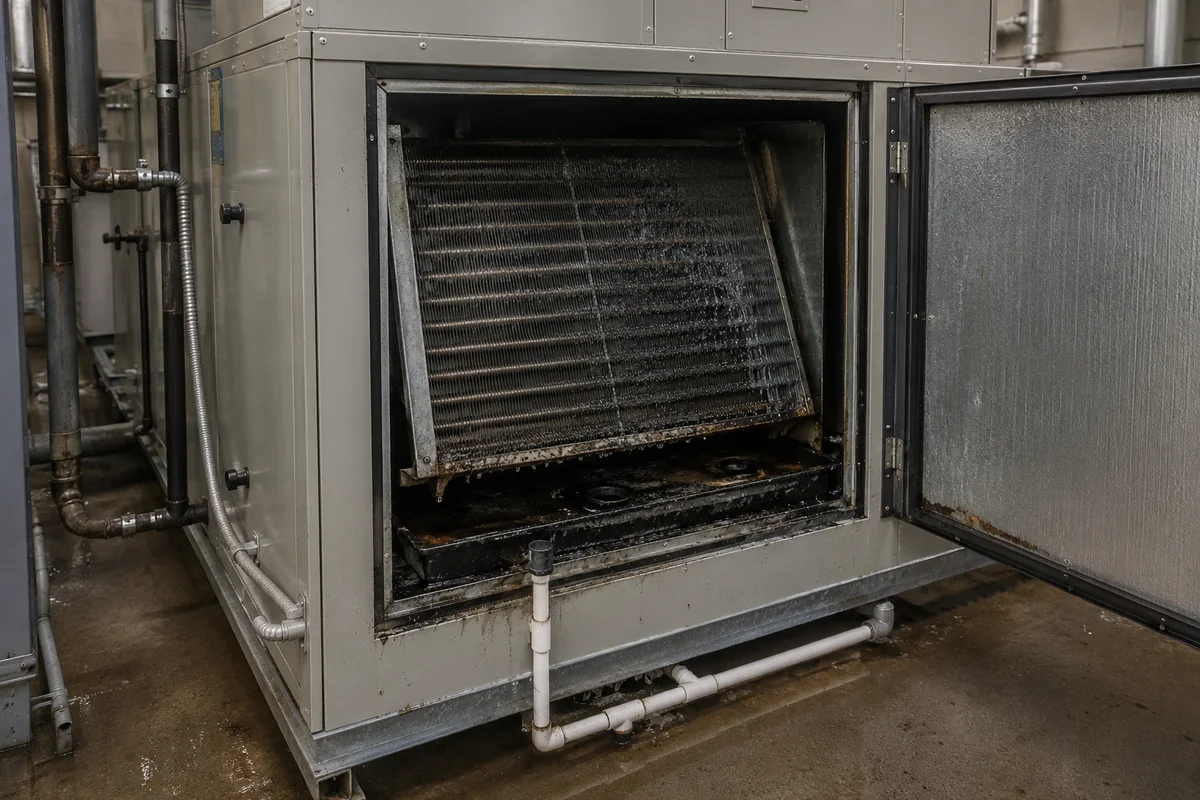
Commercial HVAC systems create and manage moisture as a normal part of cooling air. The trouble starts when that moisture lingers on surfaces where dust and organic debris also settle. A few points deserve regular attention.
- Cooling coils, where condensation forms every time the system removes humidity from the air
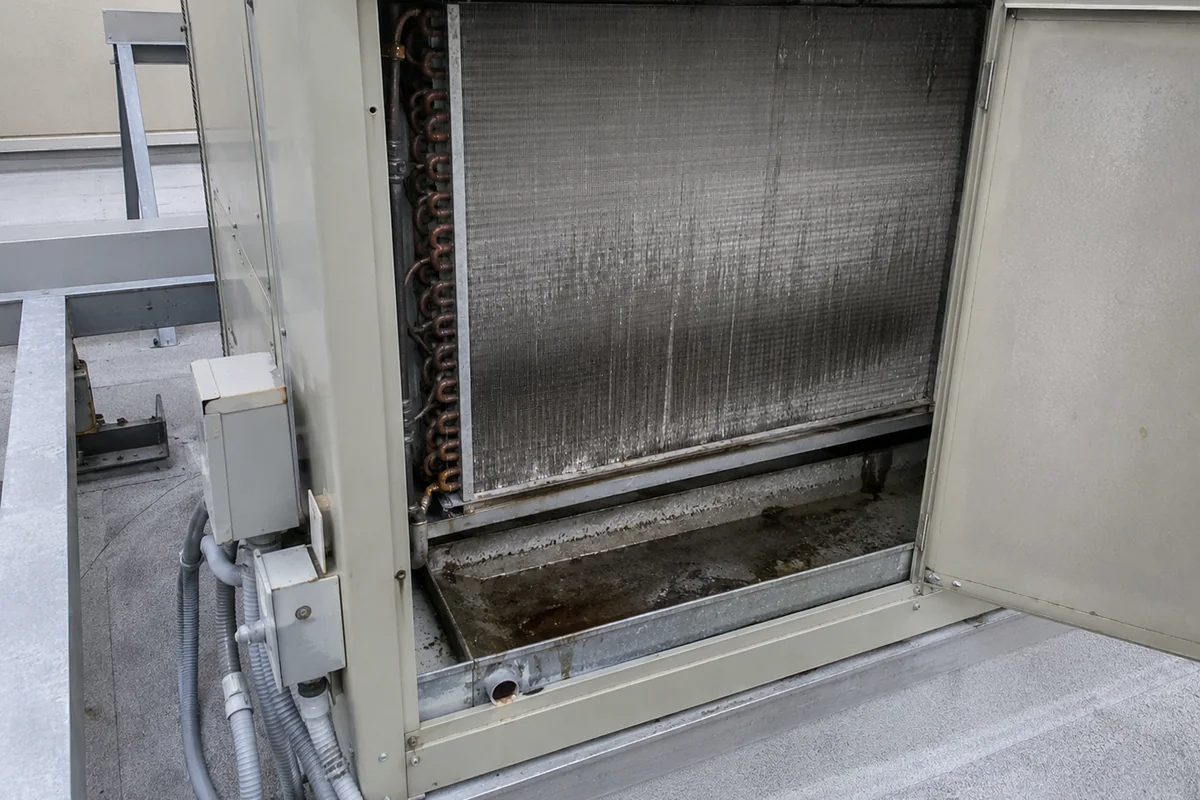
- Condensate drain pans, which hold standing water if they do not drain fully or the line clogs
- Air handling units, where filters, insulation, and interior surfaces can stay damp
- Ductwork, especially low points, flexible runs, and sections with settled dust
- Insulation and duct liner, which hold moisture and are hard to clean once affected
Condensate pans are worth singling out. A pan that stays wet between cycles, or one with a slow drain, gives mold a steady water source right at the point where air enters the distribution system. Coil surfaces sit directly upstream, so growth on either can travel downstream quickly.
How HVAC spreads spores building-wide
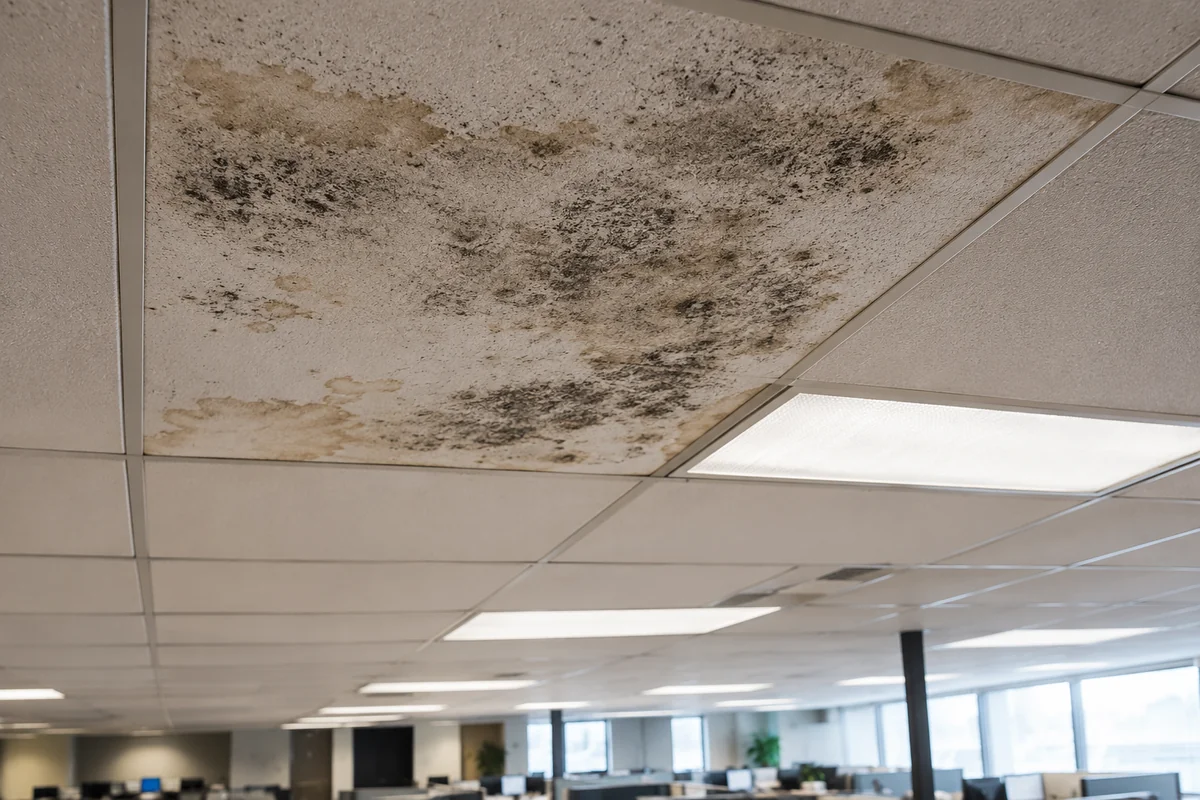
Once mold establishes on a surface in the airstream, the moving air can carry spores and fragments into the ducts and out through the diffusers. Occupants in areas with no visible moisture may still notice musty odors or report symptoms, because the source is upstream in shared equipment rather than in their own space. This is why a problem confined to a mechanical room can generate complaints across several floors, and why HVAC is a recurring theme in mold in office buildings investigations.
The link to sick-building complaints and indoor air quality
The EPA and CDC describe indoor mold exposure as a potential trigger for respiratory irritation and allergy-type symptoms in some people, with sensitivity varying widely from person to person. When multiple occupants in different areas report similar symptoms that improve away from the building, the shared HVAC system is a logical thing to examine. Documenting complaints by location and time helps an assessor see whether the pattern points back to the air distribution system rather than to a single room.
Coil and drain-pan maintenance that reduces risk
Routine mechanical maintenance is the most practical defense. A maintenance program that keeps moisture moving and surfaces clean gives mold far fewer places to establish.
- Keep condensate pans sloped and draining, and clear drain lines on a schedule
- Inspect and clean cooling coils so biofilm and debris do not accumulate
- Change filters on schedule to keep dust out of the downstream system
- Control indoor humidity so surfaces stay drier between cooling cycles
- Fix roof, envelope, and plumbing leaks near ductwork before water reaches the system
Inspection: what to look and smell for
Facility staff can perform a first-level walk-through without opening sealed equipment. A musty smell that gets stronger near return vents or the mechanical room, visible discoloration on accessible duct interiors or diffuser faces, standing water in a drain pan, and clusters of occupant complaints tied to certain zones are all reasons to look closer. If findings suggest the airstream is involved, a qualified professional can inspect interior surfaces and equipment that staff cannot safely reach.
- 1 Note the pattern of complaints by floor, zone, and time of day
- 2 Check accessible drain pans for standing water and clear evidence of overflow
- 3 Look at return grilles, diffusers, and any accessible duct interiors for discoloration
- 4 Smell near the air handler and mechanical room for persistent musty odor
- 5 If the airstream appears involved, arrange a professional assessment before any cleaning
When to bring in a licensed pro
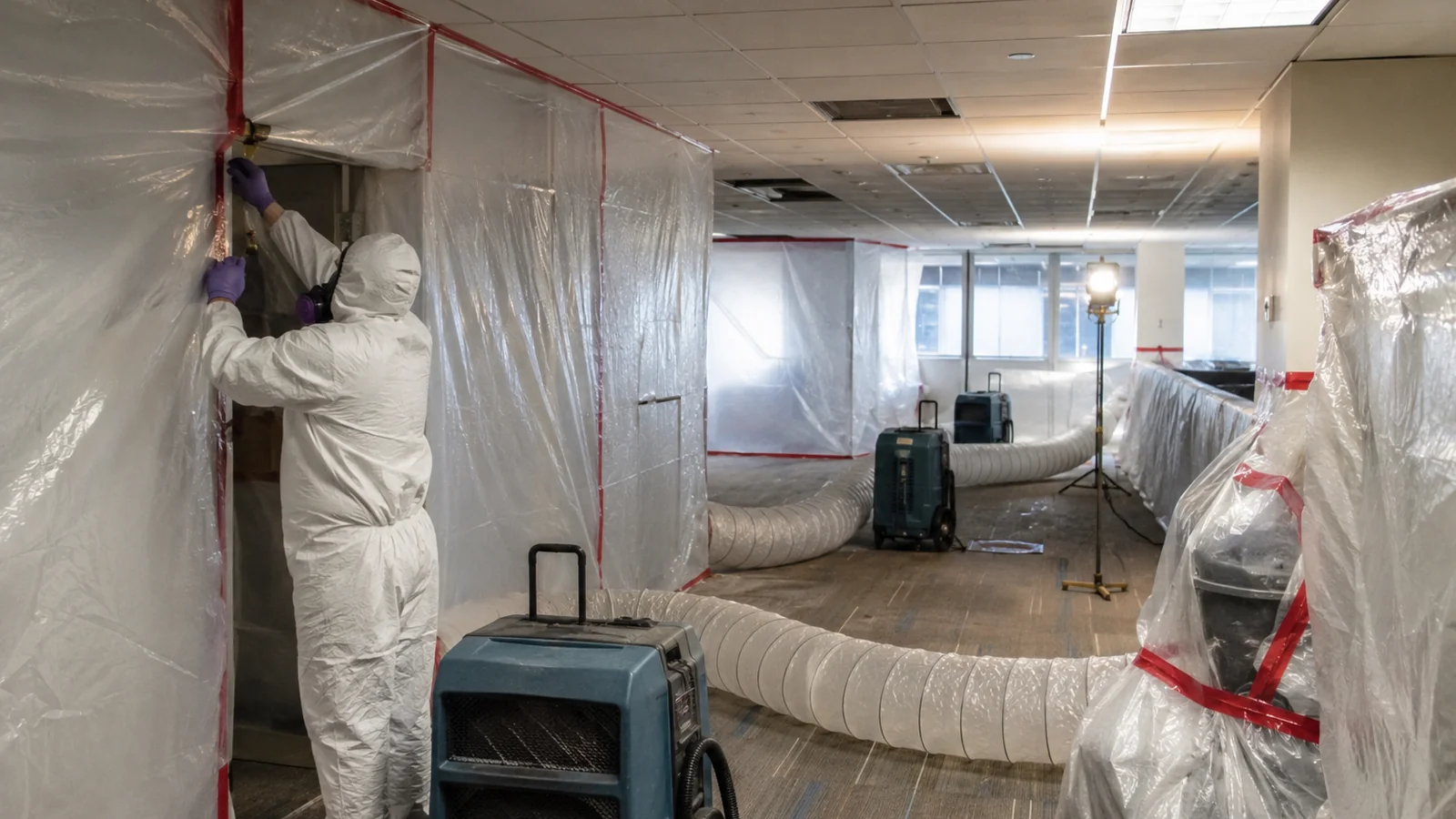
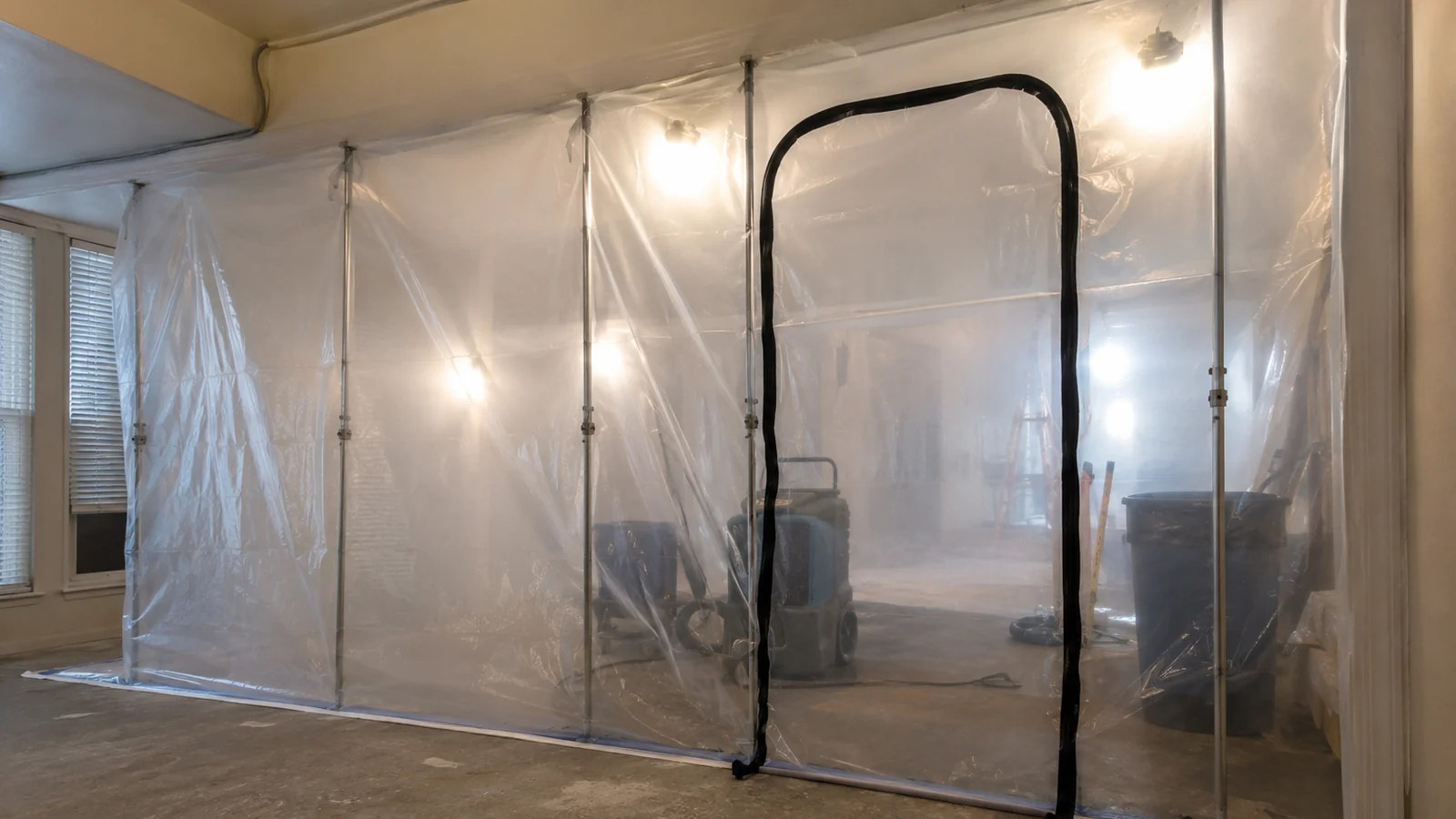
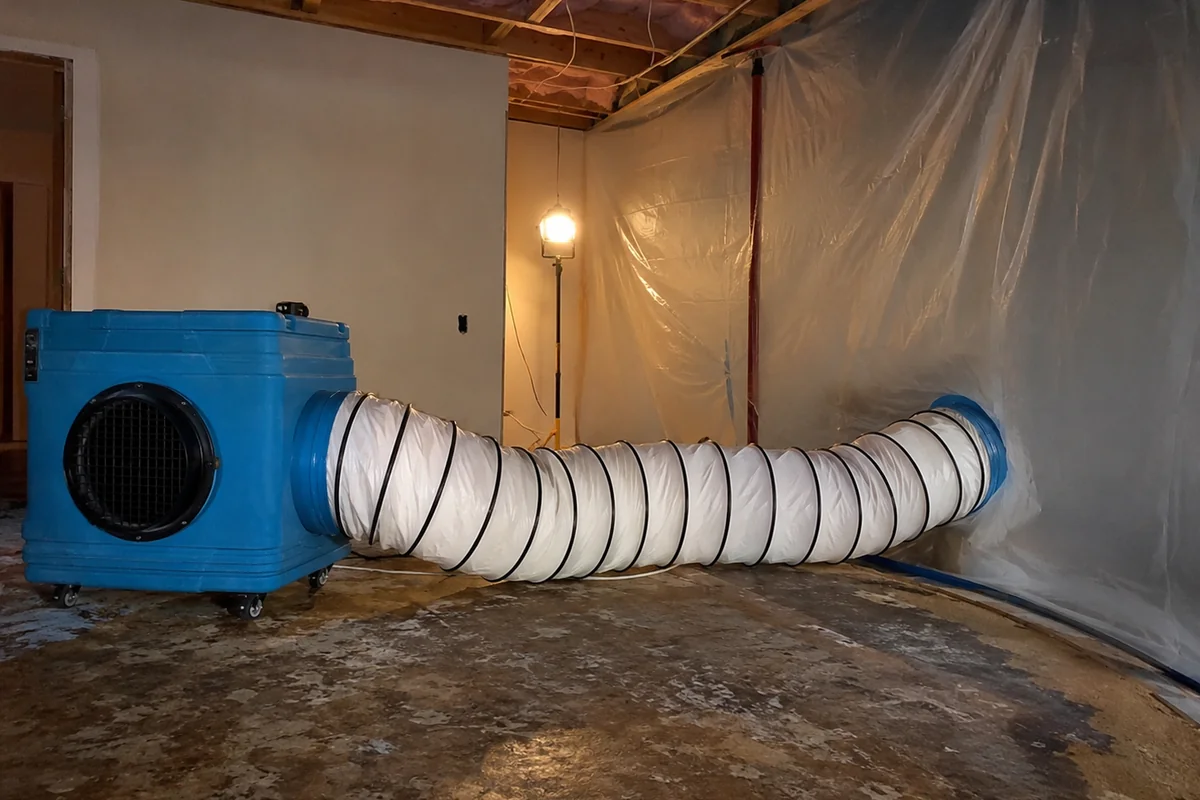
Interior HVAC surfaces, lined ductwork, and air handlers are difficult to inspect and clean correctly, and disturbing them can release spores into occupied space. A certified industrial hygienist can assess the system and identify affected components, and a licensed remediation contractor can clean or replace them under containment. Keeping assessment and cleanup as separate roles helps confirm the work is verified independently. When you are ready to move forward, you can find a licensed local pro or review who to call about mold for the sequence of specialists involved. If damage extends beyond the ductwork into building materials, plan a broader commercial mold remediation scope.
Frequently asked questions
What are the signs of mold in commercial HVAC?+
Common signs include a persistent musty odor near vents or the mechanical room, discoloration on accessible duct interiors or diffusers, standing water in condensate pans, and clusters of occupant complaints that track to certain zones served by the same system.
Should we have the ducts cleaned?+
Duct cleaning can help when there is confirmed contamination or heavy debris, but it does not fix the moisture source. The EPA suggests correcting the cause first. A professional assessment can determine whether cleaning, component replacement, or humidity control is the right response for your system.
Can mold really spread through the whole building?+
It can spread widely because the HVAC system moves air into every space it serves. A colonized coil, pan, or duct section upstream can distribute spores far from the original moisture point, which is why HVAC issues often produce building-wide complaints.
Is air testing worthwhile?+
Air sampling can be useful in some investigations, especially to compare complaint areas against outdoor and unaffected indoor baselines. It is most meaningful when a qualified professional designs the sampling plan and interprets the results alongside a visual and moisture assessment.
Commercial mold, in the field


Mold in a building you manage?
Follow a documented response that protects you from the first complaint through clearance testing.
HVAC problems rarely stay in one place, so the sooner the pattern is investigated the smaller the disruption tends to be. A structured inspection, disciplined coil and drain-pan maintenance, and an independent assessment give you a clear path forward. If you suspect mold in commercial HVAC, the licensed pros in our network can assess the system and help you plan the right response.
A tenant reported mold?
Follow a documented response that protects you, step by step.