Residential
Mold in the Basement: Find the Water, Stop the Growth
Basements stay cool and damp, which is exactly what mold needs. Fix the moisture and the mold has nowhere to go.
Mold in the basement is one of the most common problems homeowners run into, and for a simple reason: basements are cool, slow to dry, and sit surrounded by damp ground. That combination gives mold the steady moisture it needs. The good news is that basement mold is almost always a water story, so once you find and stop the water, the growth loses what keeps it alive.
Why basements are so prone to mold
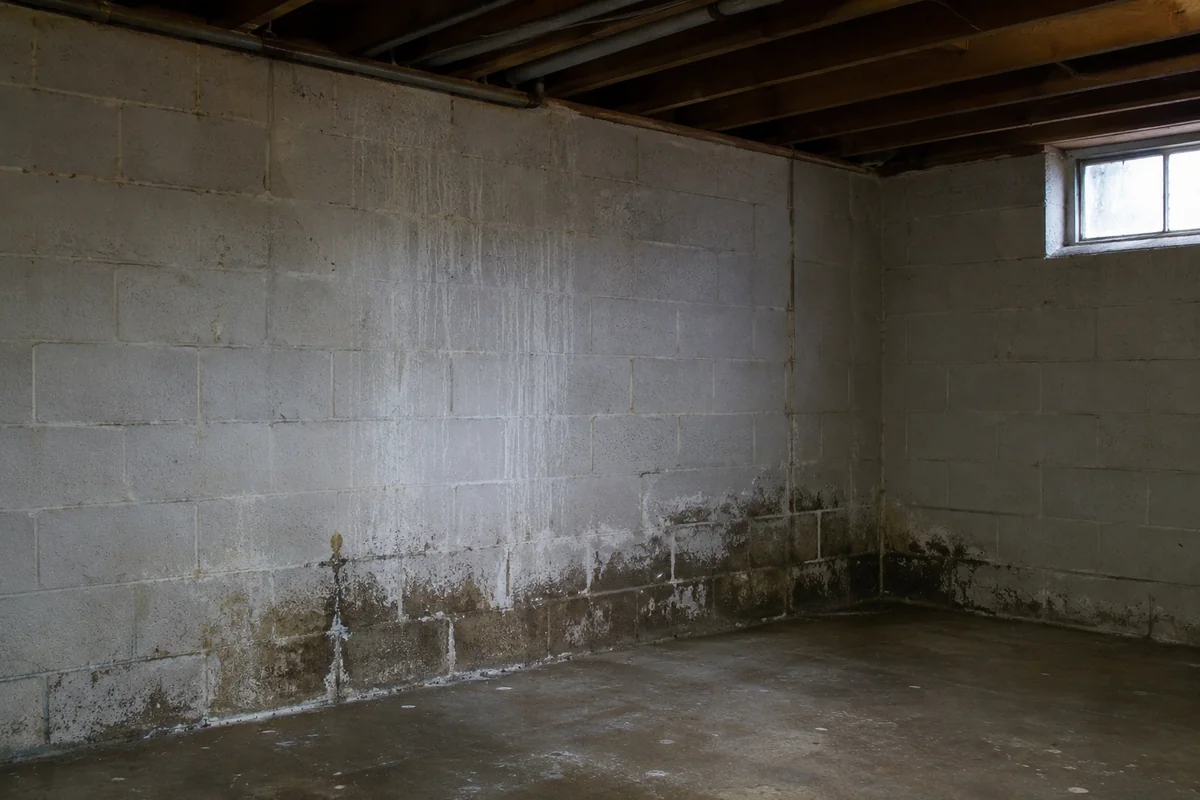
A basement is below grade, which means the soil around it holds moisture that constantly wants to move inward. Concrete and block foundations are porous enough to let some of that water and vapor through, and the space is usually the last part of a home to dry out after any wetting. On top of that, basements tend to have poor airflow, so whatever moisture arrives lingers instead of evaporating away.
There is also a temperature effect that catches many people by surprise. Basement walls, floors, and pipes stay cool year round because they are in contact with the ground. When warm, humid air from upstairs or from a summer day drifts down and meets those cool surfaces, water condenses out of it, the same way a cold glass sweats on a hot day. That condensation on cold walls and pipes feeds mold even when there is no leak at all.
- Groundwater and soil moisture pressing against foundation walls
- Poor exterior drainage, such as ground that slopes toward the house or gutters that dump water at the foundation
- Foundation cracks and gaps around pipe penetrations that let water seep in
- High indoor humidity that condenses on cool concrete walls, floors, and cold water pipes
- Flooding or a plumbing failure that soaks materials and takes days to dry
- Weak airflow, so any moisture that arrives has nowhere to go
Because so many paths lead to a damp basement, the first job is always to figure out which one is feeding your particular problem. A patch of mold on a cool wall in July points to condensation and humidity, while staining low on the wall after a heavy rain points to drainage or a foundation leak. If a recent leak or flood is the trigger, the guide to mold after water damage covers the drying window that decides whether mold takes hold.
The signs and the smell
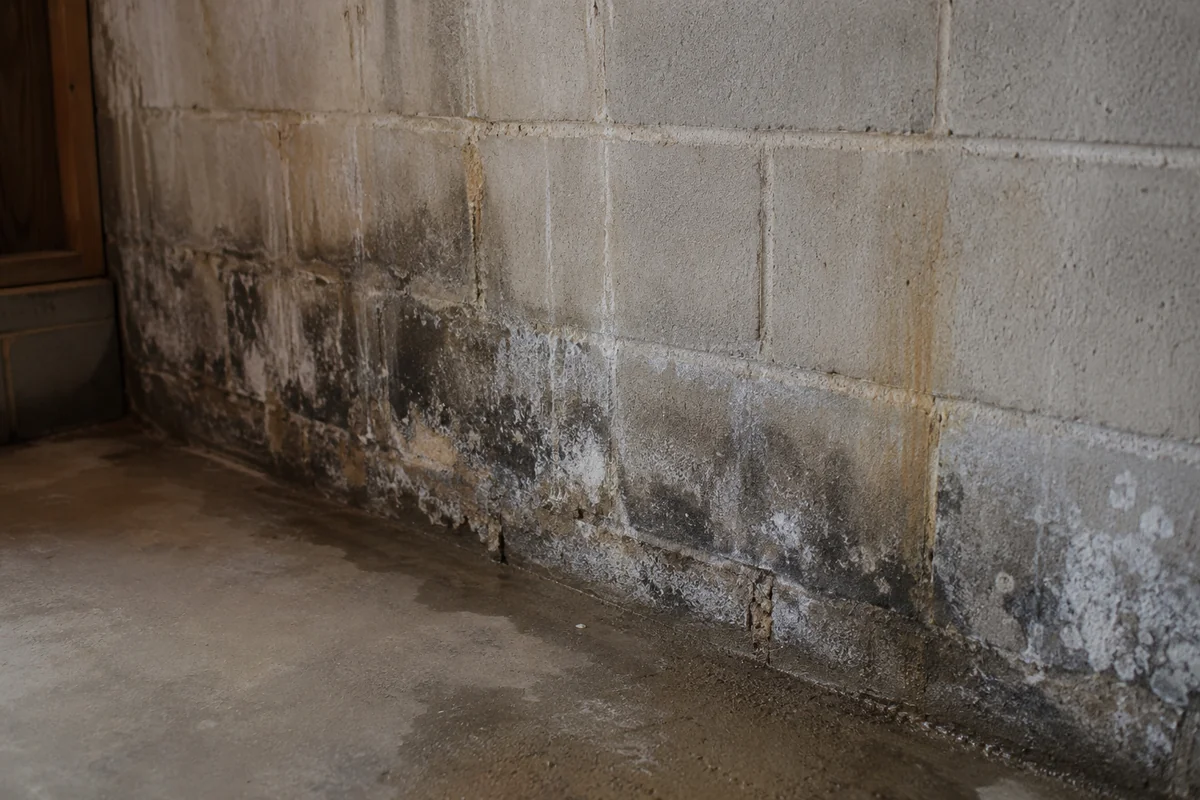
Basement mold does not always announce itself with an obvious dark patch. Often the first clue is a smell. A persistent musty, earthy odor that gets stronger when you reach the bottom of the stairs is a classic sign that mold is growing somewhere, even if you cannot yet see it. That smell comes from compounds the mold gives off as it grows, and it is worth trusting as an early warning.
Visible signs range from fuzzy or slimy spots on walls and joists to a general discoloration, spotting, or a chalky white bloom on concrete. Mold can be black, green, gray, white, or brown, so color alone will not tell you what you are dealing with. What matters more is whether the growth is spreading, whether it keeps coming back after you clean it, and whether it is tied to a damp surface.
- A lingering musty or earthy smell, strongest near the floor or in closed-off corners
- Fuzzy, spotty, or slimy patches on walls, floor joists, or stored items
- Discoloration or staining on drywall, wood framing, or insulation paper
- Peeling paint, warped paneling, or a white powdery film on concrete
- Symptoms like a stuffy nose, coughing, or itchy eyes that ease when you leave the basement
If you are not sure whether what you found is actually mold or just efflorescence, dirt, or old staining, the is it mold check walks you through the signs in a few taps. The mold smell guide is a good next stop when the odor is there but the source is hidden, and the guide on mold exposure symptoms explains which health signs are worth attention.
The one rule that decides everything
Mold cannot grow without moisture. Cleaning the surface without stopping the water only resets the clock, because the same spot will grow back within days. Always trace and fix the water source first, then handle the growth.
Finished versus unfinished basements
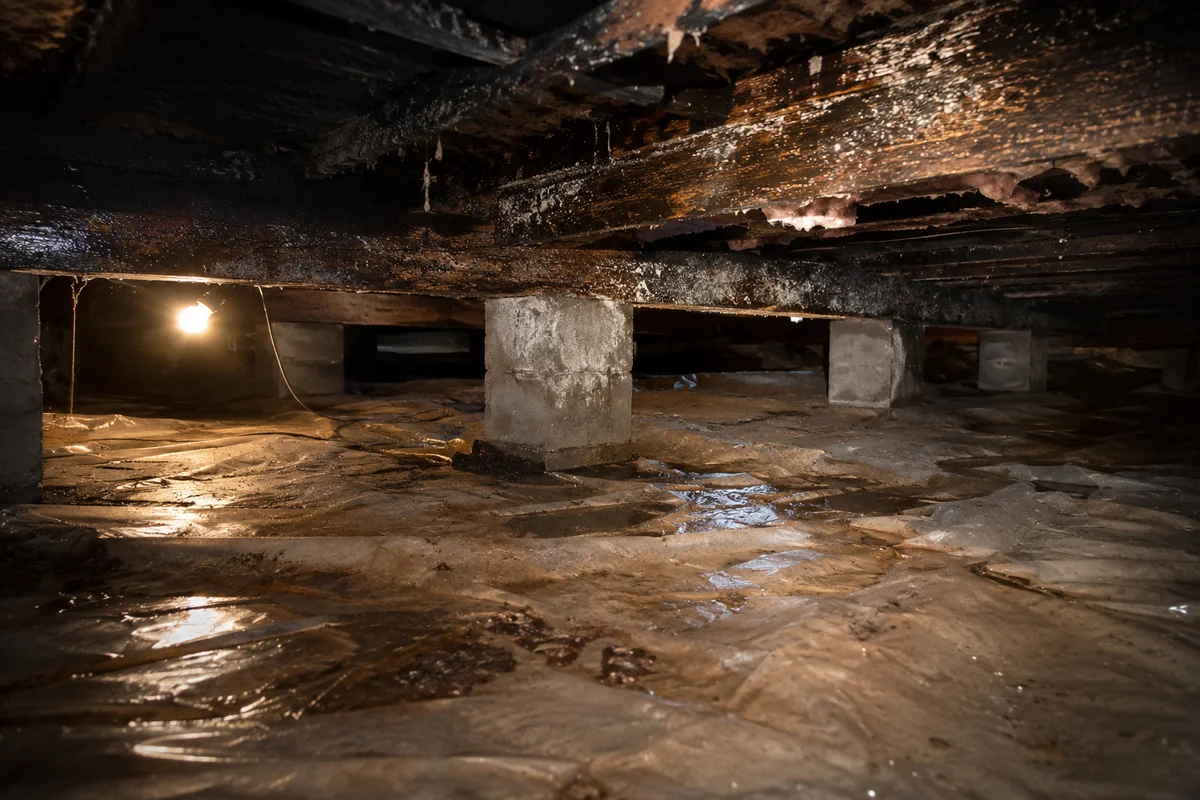
Whether your basement is finished changes both the risk and the cleanup. An unfinished basement has exposed concrete, block, and framing, so leaks and condensation are easy to spot and hard surfaces are simpler to clean. The tradeoff is that stored cardboard boxes, old furniture, and paper give mold plenty of soft material to feed on if the space stays damp.
A finished basement is trickier. Drywall, carpet, padding, and insulation hide moisture behind and beneath them, so mold can grow inside a wall cavity or under the flooring long before anything shows on the surface. By the time you see a stain or catch the smell, the growth may already be established out of sight. That is why a musty finished basement with no visible cause deserves a closer look rather than a quick wipe-down, and it is a common reason a homeowner brings in a professional who can check behind the finishes.
What has to go and what can be cleaned
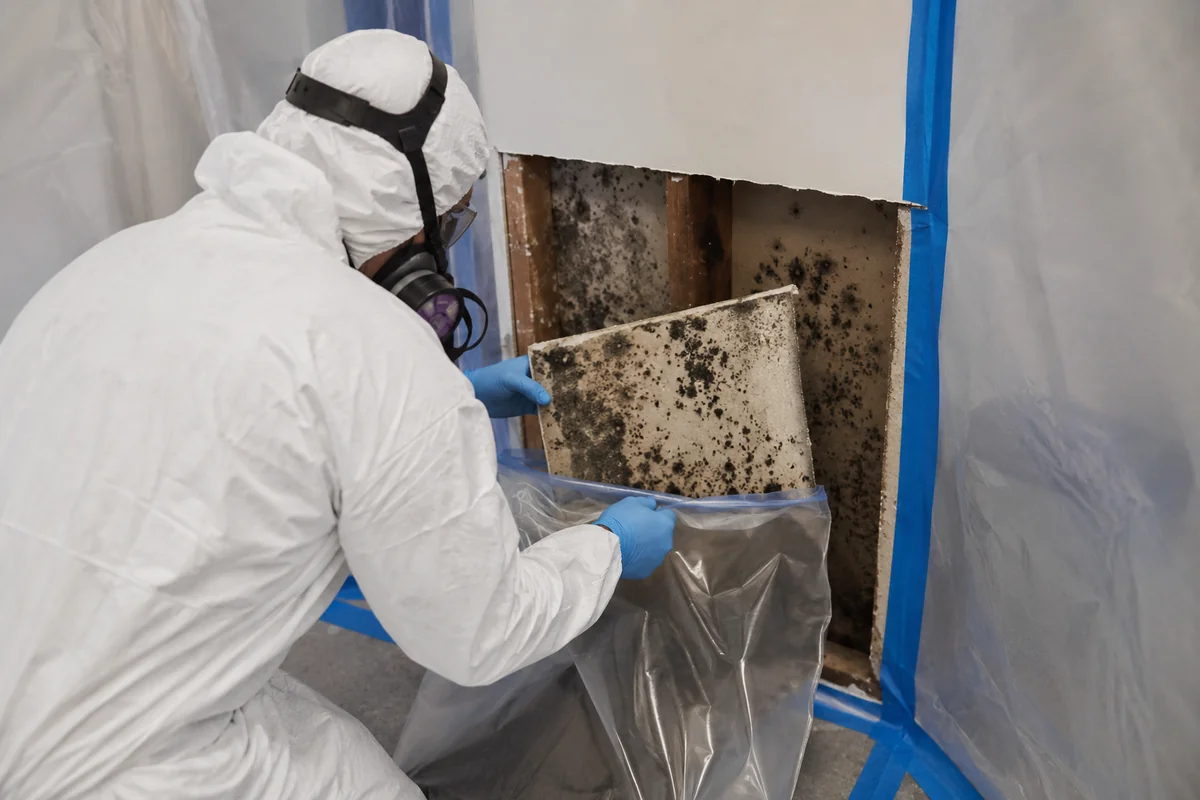
One of the most useful things to understand about basement mold is that the material decides the outcome. Hard, non-porous surfaces can usually be cleaned and kept. Soft, porous materials that have soaked up water and grown mold usually cannot be saved, because the growth roots down into the material where surface cleaning cannot reach.
- Can often be cleaned: concrete walls and floors, finished wood trim, metal, glass, and sealed or glazed surfaces
- Usually has to go: wet drywall, carpet and padding, ceiling tile, cardboard, upholstered furniture, and paper-faced insulation that has grown mold
- Depends on the extent: framing lumber and subfloor, which can sometimes be dried, cleaned, and kept if the growth is only on the surface and the wood is still sound
Porous materials that stay wet are also the reason a basement job can grow from a weekend task into professional work quickly. Once you are pulling out drywall or lifting carpet to find growth underneath, the scope has usually passed the point of a simple clean. For a walk through safe cleaning of the surfaces you can keep, see how to get rid of mold.
How to handle it, step by step
For a small, contained patch on a hard surface in an otherwise dry basement, a careful homeowner can often handle the cleanup. The order of operations matters, because disturbing dry mold sends spores into the air, and cleaning before you fix the moisture just invites a repeat.
- 1 Trace and stop the water source first, whether that is drainage, a foundation leak, a plumbing problem, or condensation. Nothing else works until this is done.
- 2 Lower the humidity with a dehumidifier and better airflow so surfaces stay dry while you work.
- 3 Protect yourself with gloves, an N95 mask, and eye protection, and keep the area ventilated.
- 4 Clean small areas of surface mold on hard, non-porous materials with detergent and water, then dry the surface fully.
- 5 Remove and bag porous materials that are soaked and moldy, such as wet drywall, carpet, and cardboard, rather than trying to salvage them.
- 6 Keep the space dry afterward and check the spot over the following weeks so the same growth does not return.
If you find yourself unsure at any step, that uncertainty is itself useful information. The do I need a pro check asks a few plain questions and gives you an honest read on whether this is still a do-it-yourself job or one worth handing off.
When to bring in a licensed pro
Some basement mold situations move out of do-it-yourself territory, and knowing where that line sits saves money and protects your health. A licensed remediation contractor can contain the area, remove affected materials safely, and correct the moisture source, which matters most when the growth is large or hidden.
- The affected area is larger than roughly 10 square feet
- The growth is behind finished walls, under flooring, or otherwise hidden
- There is a strong musty smell with no visible source you can pin down
- The basement flooded or the water was from sewage or an unknown source
- The mold keeps returning after you clean it, which usually means the water source is still active
- Someone in the home has asthma, allergies, a weakened immune system, or another reason to be more careful
When one or more of these applies, it is a good moment to bring in help. A licensed local pro seals off the work area, runs air scrubbers with HEPA filters, removes contaminated porous materials, and corrects the moisture, so spores do not spread through the rest of the house during removal. The overview of how mold remediation works explains each stage, and the guide to finding a licensed pro covers what to check before you hire.
Keeping the basement dry so mold cannot return
Since basement mold is a moisture problem in disguise, prevention is really about managing water, from the soil outside all the way to the humidity inside. The goal is a basement dry enough that mold cannot get a foothold, and most of the work happens outside the house before it ever reaches the walls.
- 1 Fix the grading so the ground slopes away from the foundation, carrying rain and snowmelt outward instead of toward the walls.
- 2 Clean the gutters and extend the downspouts several feet from the house so roof water is not dumped against the foundation.
- 3 Seal foundation cracks and gaps around pipes where water and vapor can seep in.
- 4 Run a dehumidifier to hold indoor humidity in a comfortable range, roughly 30 to 50 percent, especially in the humid months.
- 5 Add a sump pump, or maintain the one you have, so groundwater that does collect is pumped away before it sits.
- 6 Insulate cold water pipes and improve airflow to cut the condensation that forms on cool surfaces.
These steps work together, and skipping the outdoor drainage is the most common reason a dehumidifier alone never quite solves the problem. For the fuller picture on humidity, ventilation, and the spots worth watching, see the guide on how to prevent mold. A basement often shares its moisture troubles with the space beneath it, so if your home has one, the guide to mold in the crawlspace is worth reading alongside this one.
Climate plays a part as well. Warm, humid regions keep basement humidity high for much of the year, which makes steady dehumidification more important there. If you are curious how your own area compares, the mold-climate index scores each state on how favorable its climate is to mold growth.
Basement mold questions
Is a little mold in the basement normal or dangerous?+
A small patch on a hard surface in a dry basement is a manageable problem, not a crisis. It becomes more of a concern when it spreads, keeps returning, is hidden behind finishes, or when someone in the home has asthma, allergies, or a weakened immune system. The amount, the location, and who is exposed matter more than the color.
Why does my basement smell musty but I cannot see mold?+
A musty smell with no visible growth usually means mold is present somewhere out of sight, often behind finished walls, under flooring, or in stored materials. It is a common early warning worth trusting. The mold smell guide covers how to track down a hidden source.
Can I just clean basement mold with bleach?+
On a hard, non-porous surface like concrete or sealed trim, detergent and water or a product labeled for mold will lift surface growth. Bleach is not required. On porous materials like drywall and carpet, bleach fades the stain while the mold stays rooted below, which is why those items are usually removed rather than bleached.
Do I have to remove drywall and carpet that got moldy?+
Usually yes. Once porous materials like drywall, carpet, padding, and cardboard soak up water and grow mold, the growth roots into the material where surface cleaning cannot reach, so they are removed rather than cleaned. Hard surfaces underneath can often be cleaned and kept.
Will a dehumidifier alone stop basement mold?+
A dehumidifier helps a great deal with condensation and general dampness, but it will not solve a drainage or foundation leak. If water is still entering from outside, you need to fix the grading, gutters, and any cracks first, then use the dehumidifier to manage the humidity that remains.
How do I know when to call a professional for basement mold?+
Bring in a licensed pro when the area is larger than about 10 square feet, when growth is hidden behind walls or under floors, when the basement flooded or the water was contaminated, when the mold keeps returning, or when someone in the home is more sensitive. The do I need a pro check gives you a plain read.
Not sure what you found in the basement?
A quick guided check tells you what you are likely looking at and the right next step.
Keeping mold in the basement gone comes down to controlling humidity and stopping water at the source, from the grading and gutters outside to condensation on cool walls within. Match the cleanup to the size of the problem, remove porous materials that have soaked through, and bring in a licensed local pro when the growth is large, hidden, or affecting someone at higher risk, because a basement that stays dry is one mold cannot colonize.
Not sure if it is even mold?
A quick guided check tells you what you are looking at and what to do next.