Residential
Mold in the Bathroom: Clean It, Then Keep It Gone
It is almost always about moisture. Fix the air and the water, and most bathroom mold simply stops.
Mold in the bathroom is the most common indoor mold problem there is, and for good reason. A bathroom combines warm water, high humidity, and surfaces that stay damp for hours, which is exactly what mold needs to take hold. The good news is that most of what you find on grout, caulk, and ceilings is surface growth you can clean safely yourself, and the real fix is almost always about moving moist air out rather than scrubbing harder.
Why bathrooms are mold's favorite room
Every shower and bath releases a burst of warm, humid air. In a room with poor airflow that moisture has nowhere to go, so it settles on the coolest surfaces it can find and lingers there. Tile, grout, silicone caulk, painted ceilings, and window frames all stay damp long after you have toweled off, and a surface that stays wet for a day or two is all mold needs to establish.
Three things line up in a bathroom that rarely line up anywhere else in a home. There is a constant source of water, from the shower, the tub, the sink, and sometimes a slow leak behind them. There is high humidity that spikes with every use. And there is often weak ventilation, either a fan that is undersized, aging, or simply never switched on, or a room with no window at all. Take away any one of those and mold struggles, but bathrooms tend to supply all three at once.
That is why bathroom mold reads as a moisture problem first and a cleaning problem second. If you only wipe the growth away and change nothing about the air and water, the same spot fills back in within weeks. If you are not certain the dark patch you are looking at is even mold, the is it mold check walks you through the signs in a few taps before you spend time on it.
Where bathroom mold likes to hide
Some bathroom mold is obvious, on the grout lines or the ceiling above the shower. Other growth sits in spots you do not check often, which is how a small problem becomes a persistent one. The usual places to look:
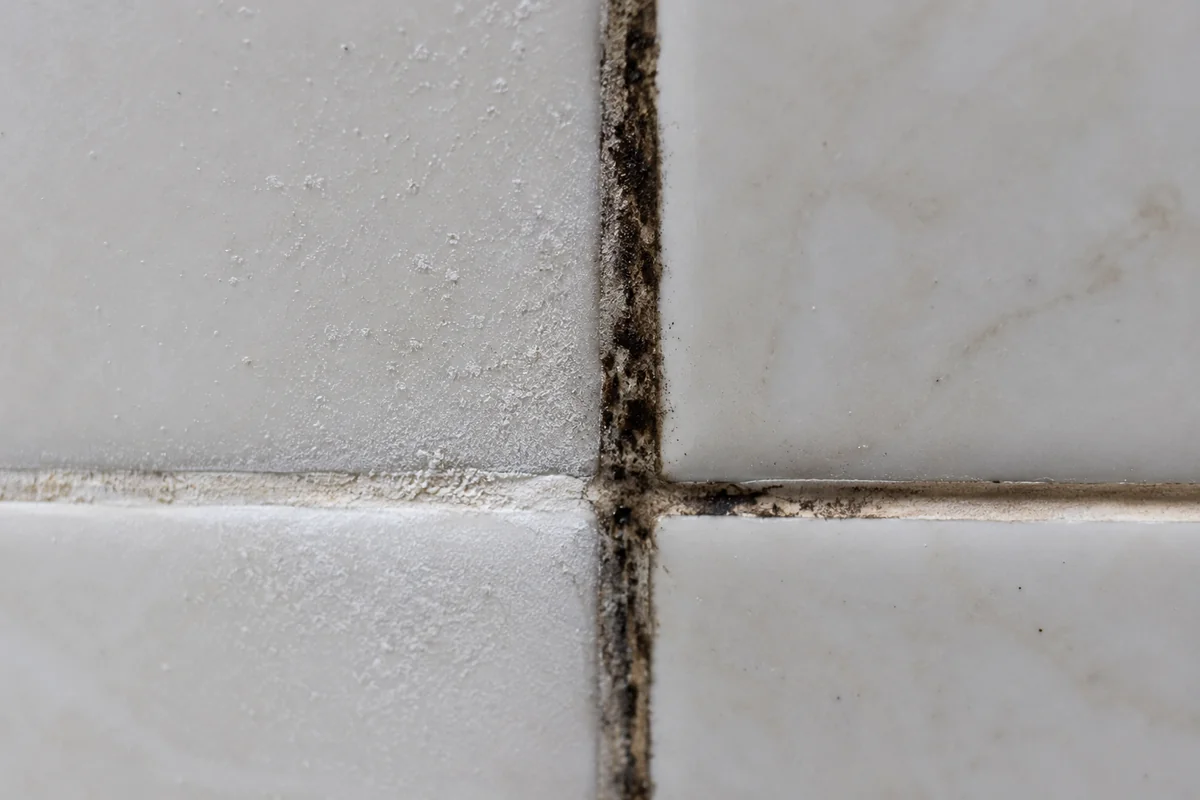
- Grout lines between tiles, where the porous cement holds moisture and darkens over time
- Silicone caulk around the tub, shower, and sink, which stains from the inside as mold roots into it
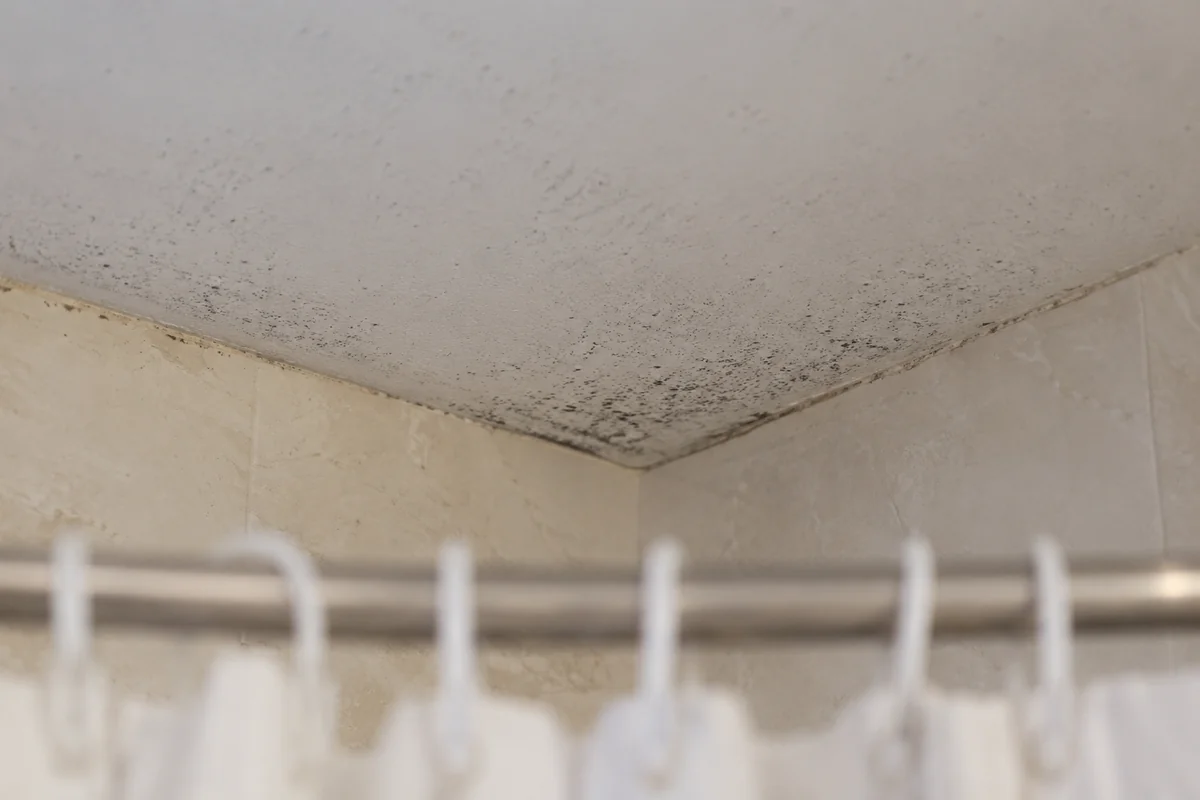
- The ceiling directly above the shower, where rising steam condenses and sits
- Behind and along the edges of tile, especially where old grout has cracked and let water in
- Under the sink, around the trap and supply lines, where a slow drip goes unnoticed for months
- In and around the exhaust fan housing, where dust and damp combine
- Window sills and frames that collect condensation in cold weather
The location usually points straight to the source. Mold on the ceiling means steam is not being vented. Mold under the sink means a leak, not humidity. Mold that keeps returning along a caulk line often means water is getting behind it. Reading the spot tells you what to fix, not just what to clean.
Surface mold versus a moisture problem
A patch you can wipe off a hard, non-porous surface is surface mold, and it is a manageable do-it-yourself job. Mold that keeps returning in the same place, or a ceiling or wall that feels soft or looks stained from within, means water is coming from behind the surface. That is no longer a cleaning task, and it is worth having a licensed pro look at it.
Cleaning surface mold safely yourself
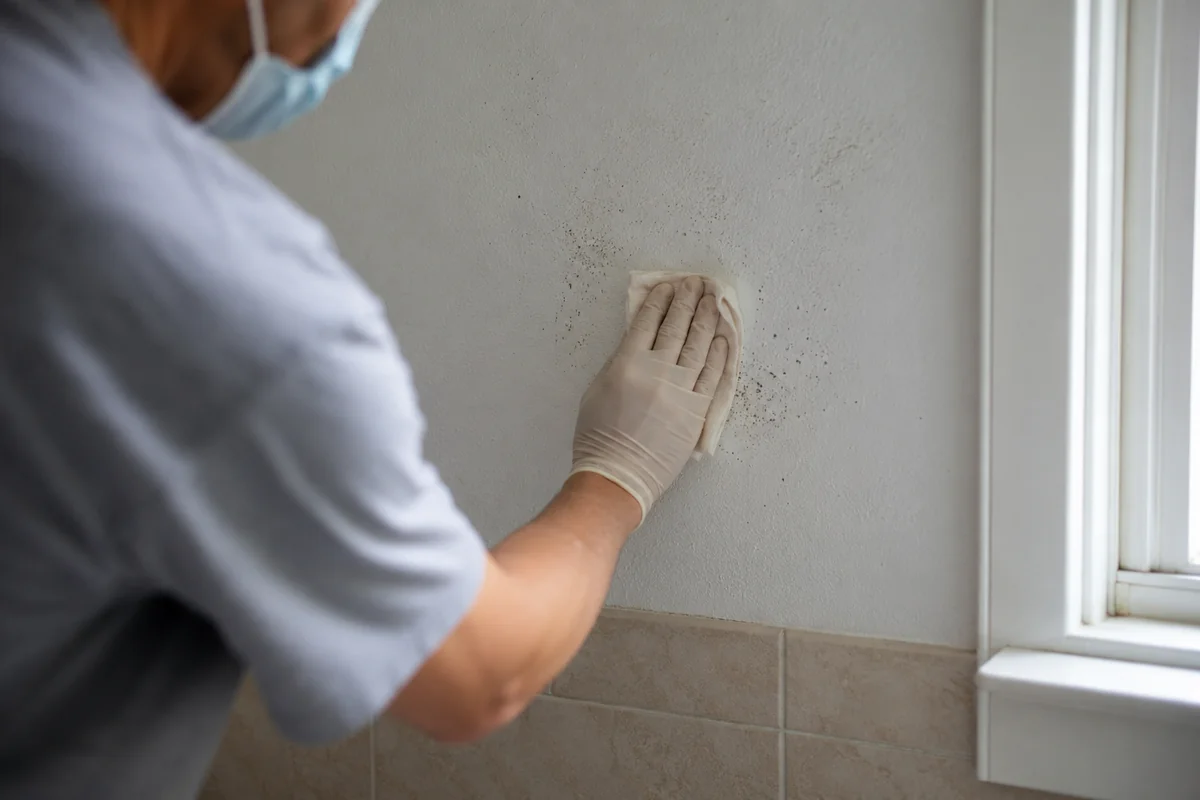
For a small area of surface growth on tile, glass, or sealed surfaces, cleaning it yourself is reasonable and safe when you take a few basic precautions. The goal is physical removal of the mold and a surface that dries out fully afterward, not just a lighter stain.
- 1 Open a window and run the exhaust fan before you start, so spores you disturb are carried out rather than around the room.
- 2 Put on rubber gloves, an N95 mask, and eye protection, since scrubbing sends particles into the air you breathe.
- 3 Wipe the area with detergent and warm water, or a product labeled for mold, working gently so you lift the growth rather than grinding it in.
- 4 Rinse, then dry the surface completely with a towel or let the fan run, because any moisture left behind invites the mold straight back.
- 5 Replace mold-stained silicone caulk rather than painting or scrubbing over it, as the growth roots into the caulk and a fresh bead is the cleaner fix.
- 6 Bag and bin the cloths, sponges, and gloves you used instead of reusing them elsewhere.
Why bleach is not the whole answer
A common question is whether bleach is the answer. On a hard, non-porous surface like tile or glass, detergent and water or a mold-labeled product lifts surface growth just as well, and bleach is not required. Where bleach falls short is on porous materials like drywall, wood, and grout, where it can fade the stain on top while leaving the mold rooted below. That is why a scrubbed grout line often looks clean for a week and then darkens again, and why a fresh bead of caulk beats bleaching an old one.
The fumes are worth respecting too. Bleach needs real ventilation, should never be mixed with ammonia or other cleaners, and can damage fabrics and finishes it splashes onto. The point is not that bleach is useless, only that physical removal followed by a dry surface is what actually solves bathroom mold, whatever product you reach for. For a fuller walkthrough of doing this right, see how to get rid of mold.
When bathroom mold is more than surface deep
Most bathroom mold is surface growth, but not all of it. When water is getting behind the tile, the drywall, or the ceiling, cleaning the visible patch does nothing about the growth in the cavity behind it, and it comes back on a schedule. Certain signs suggest the moisture, and the mold, is deeper than a wipe can reach:
- The same spot regrows within a few weeks no matter how well you clean it
- The drywall or ceiling feels soft, spongy, or bulges when you press it
- There is a persistent musty smell with no visible source
- Paint is bubbling or peeling, or grout and caulk keep failing in the same area
- The stain spreads outward over time rather than staying put
- Someone in the home has breathing symptoms that ease when they leave the room
Any of these points to a leak or trapped moisture inside the wall, floor, or ceiling assembly rather than simple shower steam. Porous materials that stay wet, like drywall and ceiling tile, usually have to be removed rather than cleaned, which moves the job out of do-it-yourself territory. If you are weighing it up, the do I need a pro check asks a few questions and gives you a plain read on which side of the line you are on, and the cost estimator gives honest local ranges so a professional job is not a black box.
It also helps to know why color alone should not drive the decision. Dark or black-looking mold in a bathroom is common and is usually the same allergen-and-irritant story as any household mold, so the amount, the location, and who is breathing it matter far more than the shade. The guide on whether black mold is dangerous lays out the honest picture without the horror-story exaggeration.
How a licensed pro handles a hidden bathroom problem
When mold is behind the walls, tied to a plumbing leak, or spreading beyond the visible area, a licensed remediation contractor follows a process built to keep spores from spreading during removal. Knowing the basics helps you recognize good work when you see it.
The area is sealed off with sheeting and put under negative air pressure so spores do not drift into the rest of the home, and air scrubbers with HEPA filters run throughout the work. Affected porous materials such as drywall are removed and bagged rather than cleaned, the leak or moisture source behind the wall is corrected as part of the job, and the space is dried before anything is closed back up. The walkthrough of how mold remediation works covers each stage, and when you are ready to bring someone in, the guide to finding a licensed pro explains what to check first. If you are not sure who to contact for your situation, who to call points you in the right direction.
Ventilation is the real fix
Since bathroom mold is really a moisture problem wearing a disguise, prevention starts with getting the humid air out fast. A working exhaust fan is the single most useful tool you have, and most bathroom mold problems trace back to a fan that is undersized, aging, vented into the attic instead of outside, or simply never turned on.
- Run the exhaust fan during every shower and for fifteen to twenty minutes afterward, and open a window when the weather allows
- Check that the fan actually vents outside, not just into the attic, where the moisture it removes would only cause a new problem
- Make sure the fan is strong enough to clear the steam, and clean the dust off its cover so it moves air freely
- In a room with no window or weak fan, leave the door open after showering, or add a small dehumidifier
The habits that keep mold from returning
Once the air is moving, a few small routines keep surfaces from staying wet long enough for mold to establish. None of these takes more than a minute, and together they make the room a place where mold cannot get a foothold in the first place, which is far easier than cleaning it over and over.
- Squeegee or wipe down shower walls, glass, and the tub after use so water is not left standing
- Spread out damp towels and bath mats so they dry rather than staying folded and wet
- Fix drips under the sink and around the tub quickly, before a slow leak feeds hidden mold
- Keep an eye on grout and caulk, and re-seal or replace them when they crack or start to fail
Steady moisture control is the single most effective way to keep bathroom mold from returning. For humidity targets, ventilation, and the other trouble spots worth watching around the home, see the guide on how to prevent mold. Bathrooms are rarely the only damp room, so it is worth understanding the pattern once and applying it everywhere.
Where you live plays a part too. Warm, humid regions keep indoor moisture high for much of the year, which is why bathroom mold tends to be more persistent along the Gulf Coast and the Southeast. If you are curious how your own area compares, the mold-climate index scores each state on how favorable its climate is to mold growth.
Bathroom mold questions
Why does mold keep coming back in my bathroom?+
Almost always because the moisture behind it has not changed. If you clean the surface but the room still fills with steam that cannot escape, or there is a slow leak feeding the spot, the mold simply regrows. Fixing the ventilation or the leak is what actually stops the return, not scrubbing harder.
Is it safe to clean bathroom mold myself?+
For a small area on a hard, non-porous surface like tile or glass, yes, using rubber gloves, an N95 mask, eye protection, and good ventilation. Larger areas, growth behind the walls, or a spot that keeps returning are reasons to bring in a licensed pro instead.
Does bleach kill bathroom mold?+
On hard, non-porous surfaces, detergent and water or a mold-labeled product works just as well, so bleach is not required. On porous surfaces like grout, drywall, and wood, bleach often fades the stain while the mold stays rooted below, so physical removal and a dry surface matter more than the product you pick.
Is black mold in the bathroom dangerous?+
Dark mold in a bathroom is common and usually behaves as an allergen and irritant, so the amount, the location, and who is breathing it matter far more than the color. A small patch you can wipe away is manageable. The guide on [whether black mold is dangerous](/residential/is-black-mold-dangerous/) covers the honest risk picture.
How do I know if mold is behind my bathroom wall?+
Warning signs include a persistent musty smell with no visible source, drywall or ceiling that feels soft or bulges, paint that bubbles or peels, and mold that regrows in the same place no matter how you clean it. Any of these suggests trapped moisture inside the wall rather than simple surface steam.
Do I need to test bathroom mold before cleaning it?+
Usually not. If you can see and smell mold, you already know it needs to come out and the moisture needs fixing, and a lab result rarely changes that for a small bathroom patch. If you want to weigh it up, the guide on [whether to test for mold](/residential/should-i-test-for-mold/) explains when testing genuinely helps.
Not sure what you are dealing with?
A quick guided check tells you what you are likely looking at in the bathroom and the right next step.
Mold in the bathroom is manageable once you treat it as the moisture problem it is. Clean surface growth safely with gloves, a mask, and ventilation, move the humid air out with a working fan and an open window, and fix any leak that keeps a spot wet. When the growth is behind the wall, keeps returning, or spreads beyond the surface, bring in a licensed pro rather than fighting the same patch again, because a dry bathroom is a bathroom mold cannot colonize.
Not sure if it is even mold?
A quick guided check tells you what you are looking at and what to do next.