Residential
Mold in HVAC and Air Ducts: What to Do
Mold in a heating and cooling system can spread through every room. This is where professional help usually earns its cost.
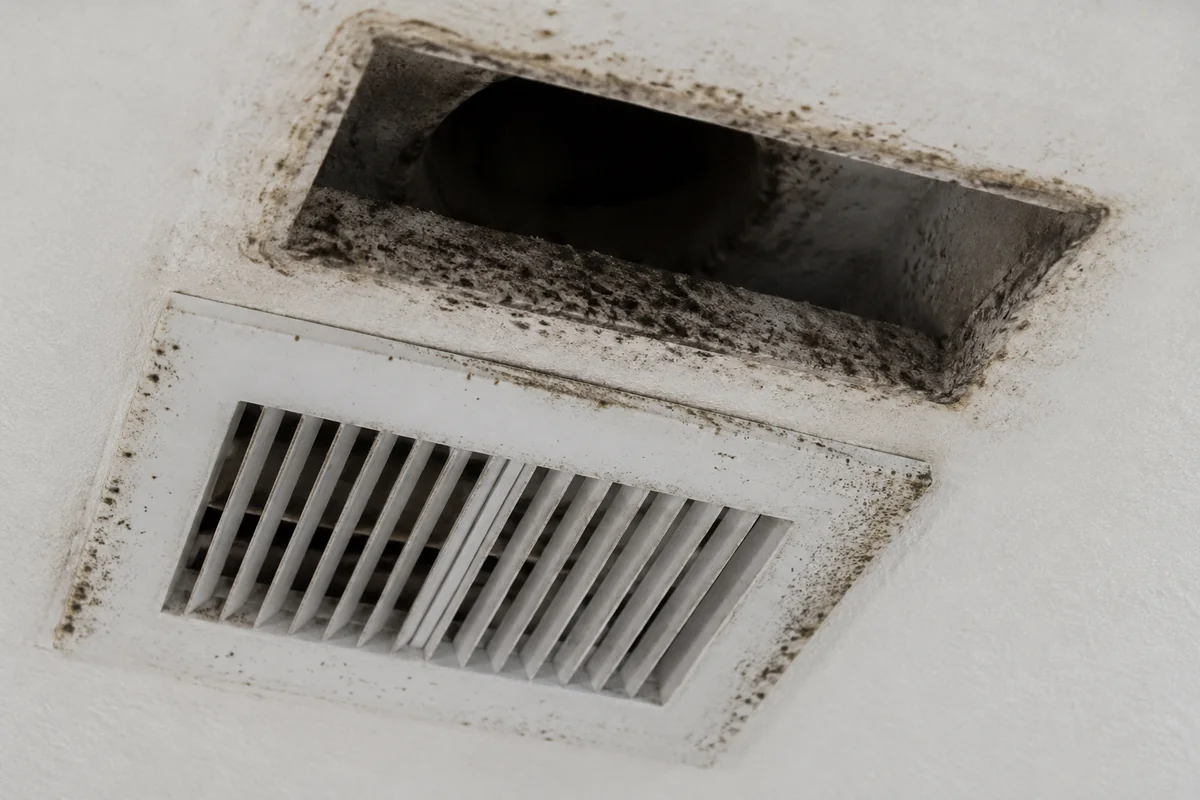
Mold in HVAC and air ducts is worth acting on quickly, because a heating and cooling system does something no other trouble spot can do: it moves air, and the spores in it, into every room it serves. A damp coil or a puddle in a drain pan is not just a local problem when the blower is running. That is why a musty smell that appears the moment the air conditioning kicks on is one of the clearest signals that mold has found a home inside the system rather than on a single wall.
Why mold grows in a heating and cooling system
An air conditioner works by pulling warm household air across a cold evaporator coil, and that temperature difference produces condensation the same way a cold glass sweats on a summer day. That moisture is a normal part of how the system cools your home. It becomes a problem only when the water has nowhere to go, or when dust and organic debris give mold something to feed on. Mold needs three things to grow: moisture, a food source, and time. The inside of an HVAC system can supply all three.
The wet spots inside the equipment are predictable. The evaporator coil stays cold and damp during cooling, the drain pan beneath it collects the runoff, and the ductwork carries humid air that can leave condensation on the metal in cooler runs. Add the fine layer of household dust that settles on every interior surface, and you have the food source. When the drainage keeps up and the system dries out between cycles, mold rarely gets a foothold. When drainage fails or humidity stays high, it does.
This is different from mold on a bathroom wall or a windowsill, where the growth stays roughly where the moisture is. If you are still working out whether the dark patch near a vent is even mold, the is this mold check walks you through the signs in a few taps before you go further.
The common causes, from most to least likely
Mold inside a system almost always traces back to a moisture problem you can name. Working out which one you have points straight at the fix, and it also tells you whether this is a job you can handle or one for a professional.
- A clogged condensate drain or a cracked drain pan, so water backs up and sits under the coil instead of draining away
- Condensation on a cold evaporator coil that never fully dries, especially when the coil is dirty and holds moisture in the grime
- High indoor humidity that leaves the ductwork and the air handler damp for long stretches
- Dirty or neglected filters that let dust build up on the coil and inside the ducts, giving mold a food source
- An oversized air conditioner that cools the house fast, shuts off, and short-cycles, so it never runs long enough to pull humidity out of the air
- Duct leaks in unconditioned spaces like attics and crawl spaces, where warm humid air meets cold duct surfaces and condenses
The oversized-unit problem surprises people, because a bigger air conditioner sounds better. In practice a unit that is too large for the space reaches the thermostat setting in short bursts and turns off before it has done much dehumidifying. The house feels cool but stays clammy, and that lingering humidity is exactly what mold wants. A right-sized system runs in longer, steadier cycles and keeps the air drier.
How the system spreads spores through the whole home
Every mold colony releases spores, and normally those spores drift only a short distance. Inside an HVAC system the blower changes that math. When mold grows on a coil, in a drain pan, or along a stretch of duct, the moving air lifts spores off the surface and carries them out through the supply vents into your living space, then pulls household air back in through the returns to repeat the loop.
The result is that a single hidden source can raise the spore level in rooms far from the equipment. People sometimes notice this as symptoms that seem to have no local cause: stuffy noses, itchy eyes, or a scratchy throat that eases when they leave the house and returns when they come back. The guide to mold exposure symptoms covers how those reactions tend to present. It is also part of why a system problem deserves a faster response than an isolated patch of surface mold.
The musty-when-the-AC-runs clue
If your home smells musty or earthy specifically when the heating or cooling switches on, and the smell fades when it stops, treat that as a strong sign the mold is inside the system rather than on a wall. The blower is carrying the odor, and the spores, along with the air.
Signs your ductwork or air handler has mold
Because most of the growth is out of sight, the clues tend to be indirect. Any one of these on its own may mean little, but several together point toward a system problem worth investigating.
- A musty or earthy smell that appears or strengthens when the system runs
- Visible dark spots or fuzzy growth on or around supply vents and registers
- Water stains or standing water near the indoor air handler or furnace
- Household symptoms that improve away from home and return indoors
- Higher-than-comfortable humidity even while the air conditioning runs
- Growth that keeps coming back on nearby surfaces no matter how often you clean it
A general musty odor without an obvious source is one of the more reliable early warnings, and it is not limited to ductwork. The guide on what a mold smell means explains how to trace that odor and tell it apart from other household smells.
What you can safely do yourself, and what you cannot
DIY has a real but narrow role here. You can handle the moisture-control basics and clean the surfaces you can actually see and reach. What you cannot safely do is clean deep inside sealed ductwork or scrub a contaminated coil, because both are hard to access, easy to damage, and easy to contaminate further by scattering spores into the airflow.
If you suspect active mold in the system, this is a sensible order of operations.
- 1 Turn the system off so the blower stops moving spores through the house while you look into it.
- 2 Check the condensate drain line and pan. Clear a clogged drain and empty standing water so the coil area can dry.
- 3 Replace the air filter, and switch to a filter with a rating your system is designed to handle so it traps more dust without straining the blower.
- 4 Wipe visible mold off the removable, non-porous parts you can reach, like a plastic vent cover or register, using gloves and an N95 mask, then dry them fully.
- 5 Address the underlying humidity, whether that means a dehumidifier, better drainage, or a look at whether the unit is oversized and short-cycling.
- 6 For anything inside the ducts, on the coil, or in the air handler itself, stop and bring in a qualified professional rather than opening up the system.
One caution on cleaning: never dry-brush or vacuum visible mold with an ordinary household vacuum, because both send spores into the air. And a surface wipe on a vent cover does not solve a problem that lives on the coil behind it. If cleaning the parts you can reach does not clear the smell, the source is deeper in the system. The do I need a pro check asks a few plain questions and gives you an honest read on which side of the line your situation falls.
Cleaning versus replacing components and ductwork
Not everything with mold on it can be cleaned, and knowing the difference helps you judge the advice you get. Hard, non-porous parts can often be cleaned in place by a professional. Porous or badly degraded parts usually need to come out.
Sheet-metal ducts and metal coils are non-porous, so a qualified contractor can often clean and disinfect them rather than replace them. The trouble spots are the porous materials. Fiberglass duct board and the flexible insulated ductwork common in newer homes hold moisture in their fibers, and once mold is established in them, cleaning rarely reaches the roots. In those cases replacing the affected sections is the more reliable fix. Insulation inside the air handler that has become moldy is usually replaced for the same reason.
This is why an honest assessment matters more than a blanket duct-cleaning offer. A licensed remediation contractor should identify the moisture source, judge what can be cleaned versus what has to be removed, and correct the water problem as part of the work, not just run a brush through the ducts and leave the leak in place. If you want a sense of the ranges before you call, the mold removal cost estimator lays out honest local figures and the common surprises.
Why DIY duct cleaning has real limits
Beyond the reach problem, there are a few reasons handling system mold yourself tends to fall short. Opening ducts without containment can spread spores through the house faster than leaving them alone. Household tools cannot reach the coil, the plenum, or the length of a duct run. And without fixing the moisture source, any cleaning you do is temporary, because the same damp conditions grow the mold back.
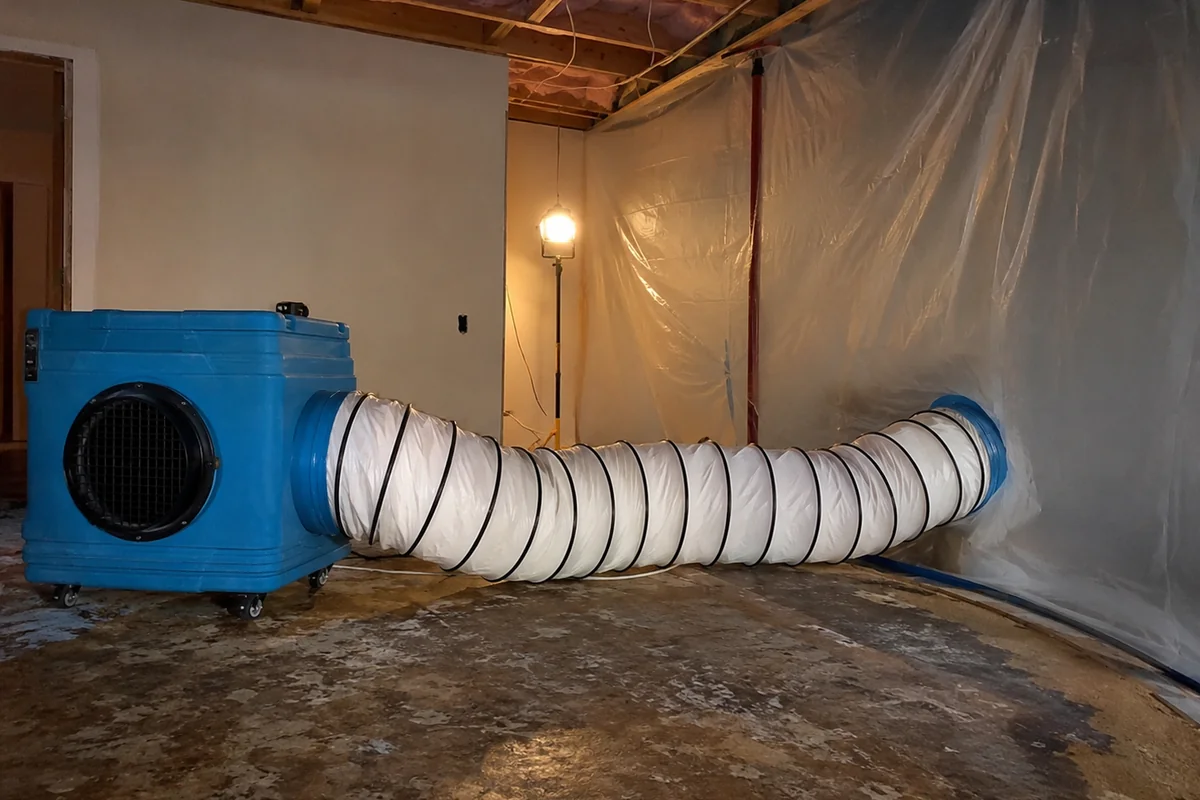
A professional brings containment, HEPA-filtered equipment, and the ability to access the parts of the system you cannot. Just as important, a good one diagnoses why the mold appeared, whether that is a failed drain, a dirty coil, or an oversized unit, so the repair actually holds. The walkthrough of how mold remediation works covers the containment and removal steps, which are the same principles applied inside a system.
When to call a licensed pro
Some situations are clear DIY territory, like wiping a little growth off a vent cover and swapping a filter. Others point firmly toward professional help. Lean toward calling a licensed local pro when any of these apply.
- Visible mold is on the coil, inside the ducts, or in the air handler rather than just on a vent cover
- The musty smell returns every time the system runs, even after you clean what you can reach
- There is standing water or persistent condensation you cannot trace or stop
- Someone in the home has asthma, allergies, a lung condition, or a weakened immune system
- The affected area is large, or growth keeps coming back after cleaning
- You suspect the ductwork is porous fiberglass or flex duct that may need replacing rather than cleaning
When it is time to bring someone in, the guide to finding a licensed pro explains what to check first, and who to call helps you sort out whether an HVAC contractor, a remediation specialist, or both is the right starting point. Matching the response to the size of the problem is the whole game: small and reachable is a DIY clean, while anything inside the system is work for someone with the equipment to do it safely.
Keeping mold out of the system for good
Because system mold is really a moisture and maintenance problem, prevention is mostly about keeping the equipment dry and clean. Steady habits do far more than any single deep cleaning.
- Change filters on schedule, roughly every one to three months, so dust does not build up on the coil and in the ducts
- Keep indoor humidity in a comfortable range, around 30 to 50 percent, using a dehumidifier in damp seasons
- Have the condensate drain and pan checked and cleared as part of routine service so water does not back up
- Schedule regular HVAC maintenance, including a coil cleaning, so the system dries properly between cycles
- Seal and insulate ducts that run through hot attics or crawl spaces to cut condensation on the metal
- If the house feels cool but clammy, have a technician check whether the unit is oversized and short-cycling
These same moisture principles apply throughout the home, since ductwork often carries a problem that began elsewhere. The broader guide on how to prevent mold covers humidity, ventilation, and the other trouble spots worth watching. Attics deserve a particular mention, because a duct leak up there is a common hidden source; the guide to mold in the attic covers how growth in that space starts and spreads.
Common questions about mold in HVAC and air ducts
How do I know if the mold is really in my ducts?+
The most telling sign is a musty smell that appears or strengthens when the system runs and fades when it stops, since that means the blower is carrying the odor. Visible growth around vents, water near the air handler, and symptoms that ease away from home all add to the picture. A licensed pro can inspect the coil and ducts directly to confirm it.
Can I just clean the air ducts myself?+
You can safely wipe visible growth off a removable vent cover or register with gloves and an N95 mask. Cleaning inside the ducts, on the coil, or in the air handler is not a DIY job, because those parts are hard to reach, easy to damage, and easy to contaminate further by scattering spores into the airflow.
Does duct cleaning get rid of the mold for good?+
Only if the moisture source is fixed at the same time. Cleaning without correcting a failed drain, a dirty coil, or high humidity just resets the clock, because the same damp conditions grow the mold back. A good contractor diagnoses and repairs the cause as part of the work.
Do the ducts need to be replaced or can they be cleaned?+
It depends on the material. Non-porous sheet-metal ducts and metal coils can often be cleaned in place. Porous fiberglass duct board and flexible insulated ductwork hold moisture in their fibers, so once mold is established in them, replacing the affected sections is usually more reliable than cleaning.
Should I turn off my HVAC if I think it has mold?+
Turning the system off is a reasonable first step while you investigate, because it stops the blower from moving spores through the house. From there, check the drain and pan, replace the filter, and decide whether the source is something you can reach or a job for a professional.
Can mold in the HVAC make my whole family sick?+
A system with mold can raise spore levels in rooms far from the equipment, which is why symptoms sometimes appear with no local cause. For most healthy people the effect is allergic or irritant in nature, such as congestion and itchy eyes. People with asthma, allergies, or weakened immune systems can react more strongly and deserve a quicker response.
Not sure whether the problem is in your system?
A quick guided check helps you tell what you are dealing with and points you to the right next step.
Mold in HVAC and air ducts earns quick attention precisely because the system spreads spores everywhere the air goes, so a musty smell when the unit runs is a cue to look closer rather than wait. Control the condensation and humidity, clean the parts you can safely reach, and bring in a licensed local pro for anything inside the ducts, the coil, or the air handler, so the air the system moves stays clean.
Not sure if it is even mold?
A quick guided check tells you what you are looking at and what to do next.